Internet for Remote Work in Bocas
Most remote workers in Bocas del Toro now run on Starlink. How to set it up for island conditions, when wired service or mobile data makes sense, and how to keep working when the power drops.
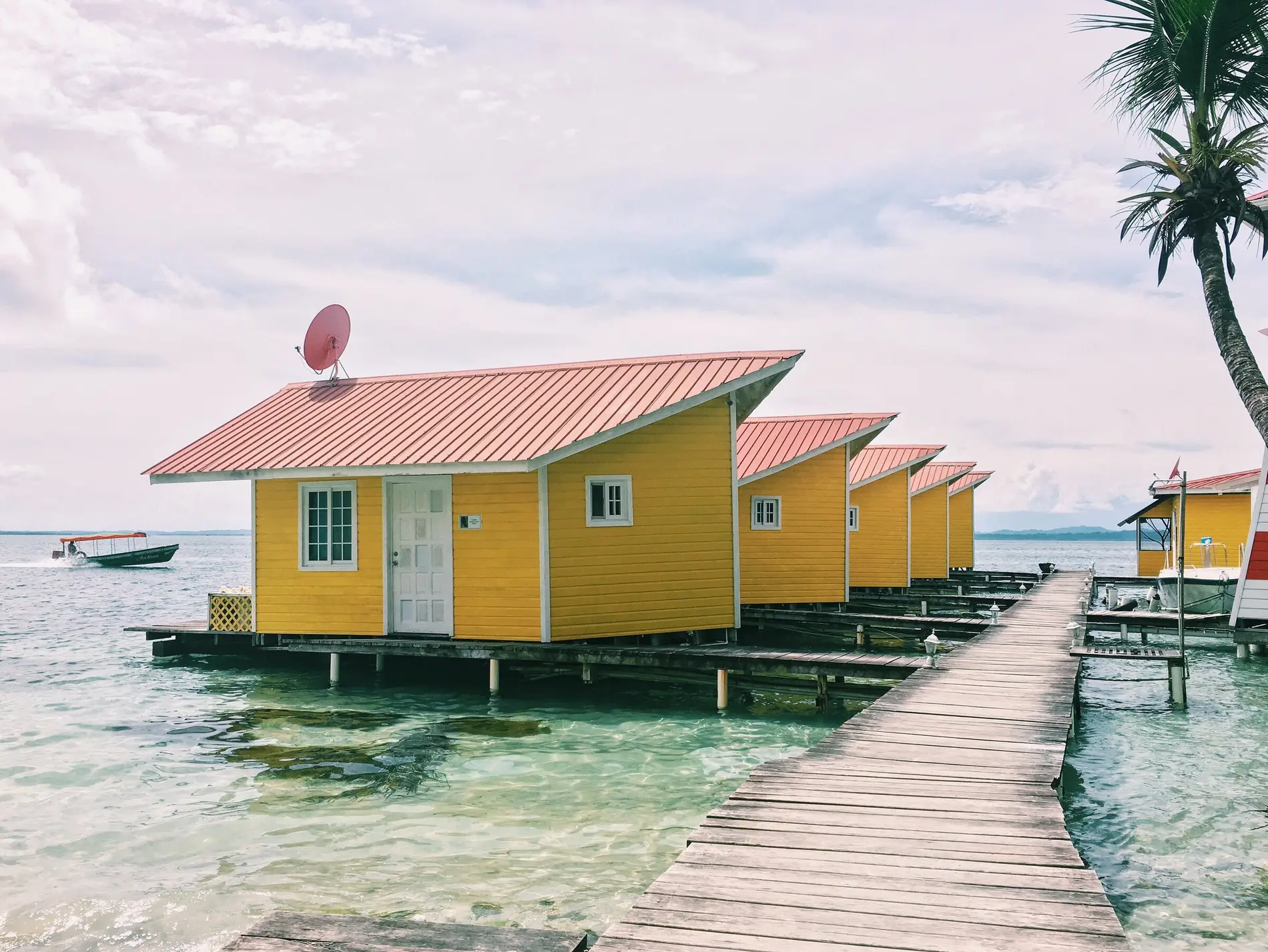
Plenty of people in Bocas del Toro hold full-time remote jobs, run client calls and upload video from the islands. These days most of them do it on Starlink, on Isla Colón as well as on the outer islands. What still takes planning is the setup around it: a clear patch of sky, a battery for power cuts, and a second way online for the day the dish drops out.
Last checked November 2026. Coverage, plans and prices change often in Panama. Treat everything below as a starting point and confirm with the provider for your exact address before you sign a lease that depends on it.
Starlink is the default now
Starlink has been available in Panama since May 2023, and it has become what most people in Bocas use for work, whether they live in town or on a bay that no cable will ever reach. You buy the kit, set the dish where it has a clear view of the sky, and pay a monthly plan directly to Starlink. Check current kit prices and plans on Starlink's own site, because both have changed several times since launch.
A few things specific to island life:
- Trees are the usual problem. Starlink needs a wide patch of open sky. A lot of houses here sit under tall trees or palms, so the dish may end up on the roof or on a pole. The Starlink app has a tool to check obstructions before you mount anything.
- Heavy rain can slow it down or drop it briefly. Bocas gets serious downpours, so expect the odd interruption during the worst of a storm.
- Salt and wind. Mount the dish firmly and keep the cable connections out of standing water. Corrosion finds everything near the sea.
- It needs power. When the grid goes down, so does Starlink, unless it is on a battery. More on that below.
Separately, in September 2026 +Móvil launched a satellite-to-phone service with Starlink that lets compatible phones connect where there is no tower signal. At launch it covers messaging and a limited set of basic uses, so it is a safety net for a boat trip or a remote beach, not a way to run a video call. Ask +Móvil which phones and plans include it.
Wired service and the mobile networks
You will still want to know the local providers, for a backup SIM, for a wired line if your address has one, and because older forum posts often name companies that no longer exist here.
- +Móvil (Cable & Wireless Panamá). Cable & Wireless Panamá bought Claro's Panama operations in 2022 and the two were merged. If someone tells you to "get Claro," they mean what is now +Móvil, also written Más Móvil.
- Tigo. The other national mobile operator, which also sells home internet and TV over cable and fiber. Panama's regulator, ASEP, lists Tigo's concession for its cable and fiber network as covering the districts of Bocas del Toro, Changuinola, Chiriquí Grande and Isla Colón.
- Digicel is gone. It announced in 2022 that it was leaving Panama after the Cable & Wireless and Claro merger, which is why you will see it in old articles and not in shops.
Alongside the two big names, smaller local and regional operators sell wireless and fixed internet in parts of the province. Ask neighbors and your landlord who they use and how it holds up in the rain. Local word of mouth is more current than anything you will find online, including this page.
The regulator for telecoms and electricity is the Autoridad Nacional de los Servicios Públicos (ASEP). If a provider does not resolve a complaint, ASEP is where you take it.
Isla Colón versus the other islands
Isla Colón, with Bocas Town, is the only place where wired service is realistic, and even there many people have switched to Starlink. If you rent in or near town and a line already reaches the house, it can make a good backup. Even on Isla Colón, coverage stops somewhere. A house a few kilometers out along the road, or on the far side of a hill, may not have a line at all.
On Bastimentos, Carenero, Solarte, Cristóbal and the many houses on stilts along the mainland shore and the bays, assume there is no wired service unless someone shows you a working connection. People on these islands run on Starlink, with mobile data as the fallback.
Before you commit to a place, do three things:
- Look for a spot for the dish. Ask whether the house already has Starlink, or use the obstruction check in the Starlink app before you sign.
- Run a speed test yourself, at the time of day you work, and look at upload speed and latency as well as download. Video calls care more about steady upload than a big download number.
- Check your phone signal inside the house on both +Móvil and Tigo if you can borrow a SIM. Walls, trees and hills make a big difference here.
Mobile data as your backup
Starlink is your main line, so keep a second one that does not depend on it. For most people that is a phone with enough data to hotspot a laptop through a storm or an outage.
- Check which network is strongest at your house. +Móvil and Tigo can differ a lot from one bay to the next. If you also have a wired line, put your SIM on the other company so the two do not share an outage.
- Prepaid is easy to start with. Both operators sell prepaid SIMs and data packages. Bring your passport in case the shop asks for ID. Compare current data packages in the shop or on each provider's site; they change often.
- Test it at your desk before you need it. Signal on the porch and signal at the kitchen table can be very different.
- A dedicated mobile router or an old phone left plugged in as a hotspot saves draining your main phone during a long call.
Power cuts and battery backup
The internet in Bocas is only as reliable as the electricity. Isla Colón is now tied to Panama's national grid by a submarine cable from Almirante, which replaced the island's own power plant, but outages still happen. In 2024, residents of the province complained publicly about frequent cuts, and storms and work on the lines still knock the power out from time to time.
The fix is a battery between the wall and your equipment.
- A small UPS (uninterruptible power supply) for the router and modem keeps a wired connection alive through short cuts, as long as the provider's network still has power too. It also protects equipment from the surges that come when power returns.
- A portable power station covers longer cuts and can run a router, Starlink, laptop, fan and lights for hours, depending on its size. Our guide to solar generators for island homes explains how to size one from the watt numbers on your devices.
- Know your numbers. Check the power draw of your router and dish on their labels or in the manufacturer's specs, add your laptop, and size the battery for the longest call or work block you cannot afford to lose.
- Keep everything charged by habit. Laptop, phone, power bank. A cut in the middle of the afternoon is much easier with a full laptop battery.
If parts of your work run on a schedule, such as reports, invoices or social posts, it also helps to move them to a cloud service so they keep running while your house is dark. Our post on automating routine work with Make covers a few of those.
Working from cafes
Many cafes, restaurants and guesthouses in Bocas Town offer wifi, and some people work from them a few days a week for the change of scene. Quality varies a lot from place to place and from day to day. A few habits make it work:
- Treat cafe wifi as a convenience, not your plan for an important call. Keep your mobile hotspot ready.
- Buy something, and order again if you stay for hours. These are small businesses.
- Ask before taking a call, and bring headphones with a microphone. Open-air rooms carry sound.
- Use a VPN or your own hotspot for banking and client systems on any shared network.
- Bring a charged laptop. Outlets near tables are not a given.
A setup that holds up
For most remote workers here, a reliable setup looks like this: Starlink as the main connection, a phone with data on whichever mobile network works best at your house, and a battery that keeps the dish and router running through an outage. With those three in place, a storm or a power cut becomes an inconvenience rather than a missed deadline.
Plans, coverage and prices change, so confirm the details with +Móvil, Tigo or Starlink for your exact location, and take service complaints that go nowhere to ASEP.