Banking and Cash in Bocas
How to open a Panamanian bank account as a foreigner, where to get cash on the islands, and how to move money in from abroad and pay your bills from Bocas del Toro.
Money in Bocas is mostly cash, carried by boat. You will pay for a water taxi, a bunch of plantains and a gas refill in dollar bills, and the nearest ATM may be a boat ride away. Rent, utilities and bigger purchases slowly push you toward a local bank account, and getting one takes paperwork and patience.
Last checked November 2026. Bank requirements, fees and limits change, and each bank sets its own. Treat the details below as a starting point and confirm with the bank before you go.
Do you need a Panamanian account at all?
Panama uses the U.S. dollar, so plenty of people live here for months on a foreign debit card and cash. That works until it does not. A local account starts to matter when you:
- pay rent or a building contractor who wants a local transfer instead of cash;
- apply for residency or buy property, where a local account and bank letters often come up;
- want to stop paying foreign ATM and transaction fees every week.
If you are here for a season, a good foreign card and a cash plan may be enough. If you are staying, start the account process early, because it rarely happens in one visit.
Opening an account as a foreigner
Panamanian banks follow strict know-your-customer rules, and they take them seriously. Expect to be asked where your money comes from and why you want the account. Requirements differ from bank to bank, and even from branch to branch, but these are the documents that come up most often:
- Your passport, and sometimes a second form of ID.
- Your residency card if you have one. Some banks only open accounts for legal residents or people whose residency application is in process. Others accept non-residents, often with more paperwork.
- A bank reference letter from your current bank, saying how long you have been a customer and that the account is in good standing. Some banks ask for one, some for two, and many want it recent, so ask before you request it.
- A personal or professional reference letter, for example from a lawyer, accountant or business contact.
- Proof of income or source of funds: recent bank statements, a pension statement, a tax return or an employment letter.
- Proof of address, sometimes from your home country and sometimes in Panama.
- A minimum opening deposit at some banks, which varies widely.
Documents in English may need a translation into Spanish, and some banks ask for an apostille on foreign documents. Ask for the exact list in writing, bring originals and copies, and expect follow-up questions. Approval can take days or weeks.
If you are working with an immigration lawyer on residency, ask whether they can introduce you to a bank they work with.
For U.S. citizens
Panama has had a FATCA agreement with the United States since 2016. Panamanian banks report accounts held by U.S. persons to Panama's tax authority, which passes the information to the IRS. Expect extra forms when you open an account. If your foreign accounts together go over $10,000 at any point in the year, you need to file an FBAR. The details are in Filing U.S. Taxes From Panama.
Banks and ATMs in Bocas Town
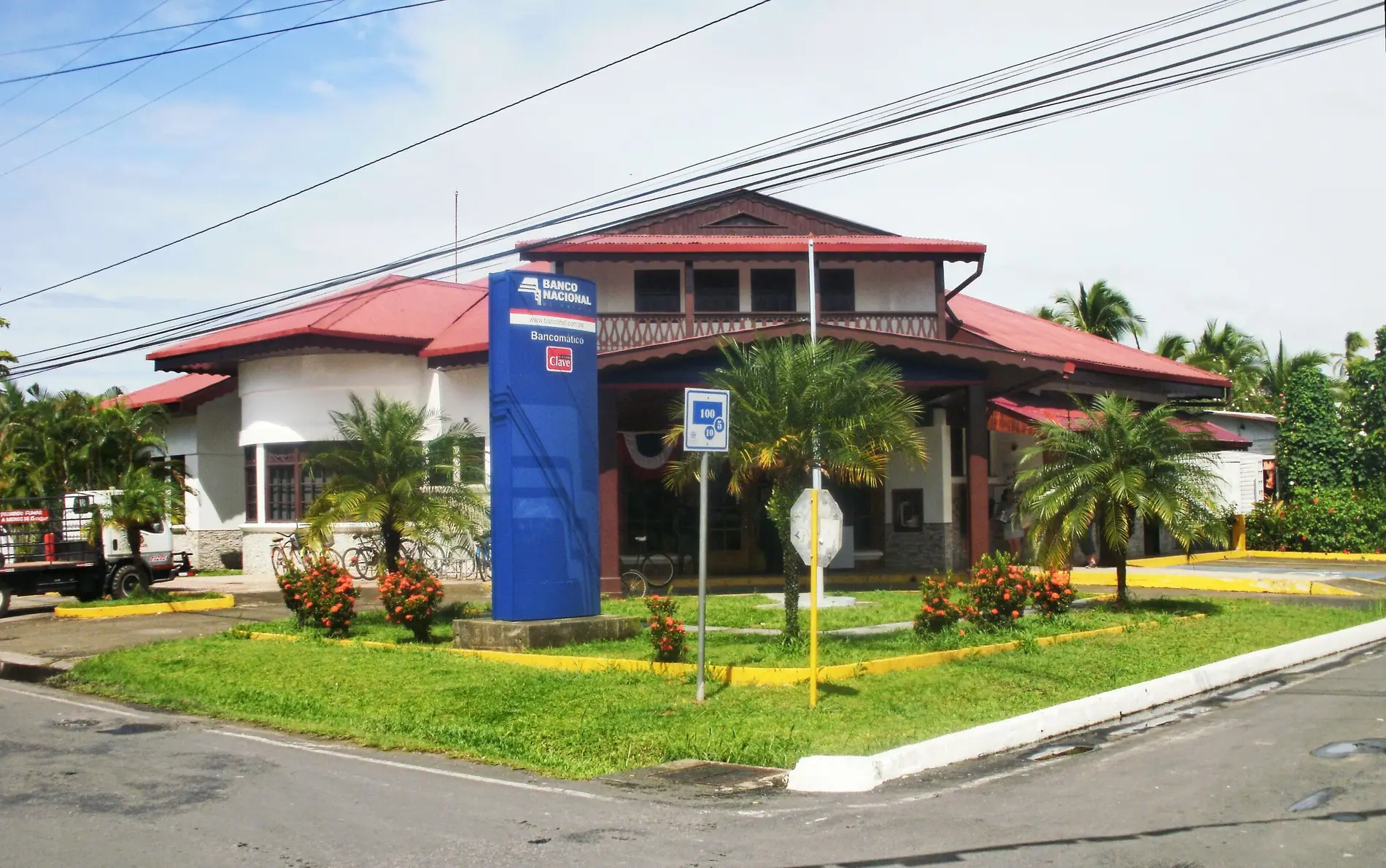
Bocas Town on Isla Colón is where the banking is. Banco Nacional de Panamá, the state bank, has a branch in town with ATMs. Hours are weekdays with limited or no weekend service, and they can change, so check before you make the trip from another island. For anything beyond a cash withdrawal, many people end up going to Changuinola, David or Panama City, where more banks have branches.
A few things island residents learn quickly:
- ATMs run out of cash, especially on weekends, holidays and busy weeks. Do not wait until Sunday to withdraw.
- Machines go down with the power or the connection. Have a backup.
- Not every foreign card works in every machine. Carry two cards from different banks, ideally on different networks.
ATM limits and fees
Panamanian ATMs usually cap how much you can take out per transaction, and your own bank sets a daily limit on top of that.
With a foreign card you can pay twice: a fee charged by the Panamanian bank that owns the machine, and a foreign ATM or currency fee from your home bank. The local fee is normally shown on screen before you confirm. Read it before you accept. Some home banks refund ATM fees, which is worth looking for before you move. Fewer, larger withdrawals keep costs down, within what you are comfortable carrying.
Before you leave home, tell your bank you live in Panama, or set a travel notice if they still use them, so the first withdrawal does not freeze your card.
Cash on the other islands
If you live on Bastimentos, Carenero, Solarte, Cristóbal or the mainland coast, plan on cash for almost everything. Small shops, water taxis, local boat captains, fruit and fish sellers and many restaurants take cash only, and card machines that do exist depend on power and signal.
- Keep a cash buffer at home, stored somewhere dry and discreet, enough for a few days of bad weather or an empty ATM.
- Carry small bills. Change for a $50 or even a $20 can be hard to find on a boat or at a small shop. Break big notes in town.
- Keep cash in a dry bag on the water.
- Do your banking with the boat schedule. Combine the ATM with the hardware store and the supermarket so one trip to town covers it.
Sending money from abroad
There are two main routes for getting your own money into Panama.
International wire transfers go bank to bank. They suit large amounts, like a house purchase or a construction payment, and they leave a clear paper trail, which matters for residency and property files. The costs add up: a sending fee from your bank, often a fee from an intermediary bank along the way, and sometimes a receiving fee at the Panamanian bank. Ask both banks for the exact wire instructions and fees before sending, and expect questions about the source of larger amounts.
Online transfer services such as Wise can pay out in U.S. dollars to a Panamanian bank account from many countries. For people paid in euros, pounds or Canadian dollars, these services often give a better exchange rate than a bank wire. Coverage depends on the country you send from, so check that your route is supported before you rely on it, and compare the total cost, not just the advertised fee.
Whichever you use, send a small test amount first when you set up a new route.
Paying bills and paying people
Utility bills can usually be paid at the provider's office, at the bank, or through online banking once you have a local account. Internet and phone companies often accept payment in their app or at their stores. Island post is unreliable, so ask how to check your balance online.
Within Panama, money moves between local banks by ACH transfer, which is how many landlords and contractors want to be paid. Many Panamanians also pay each other through Yappy, Banco General's phone-number payment app, which now works with customers of several other banks. If you have an account at a participating bank, it saves a lot of cash handling. Ask whoever you are paying which method they use.
None of this is hard once it is set up. The trick is to set it up before the week the ATM is empty and the boat is not running.